


PREVENTIVE
MEDICINE
Blood purification therapy (DFPP)
ABOUT
About Blood Purification Therapy (DFPP)
A thorough cleanse,
with specialized equipment.
Blood purification therapy (DFPP) is advanced medicine that selectively separates and removes specific components from the blood, aiming to maintain a healthy internal balance.
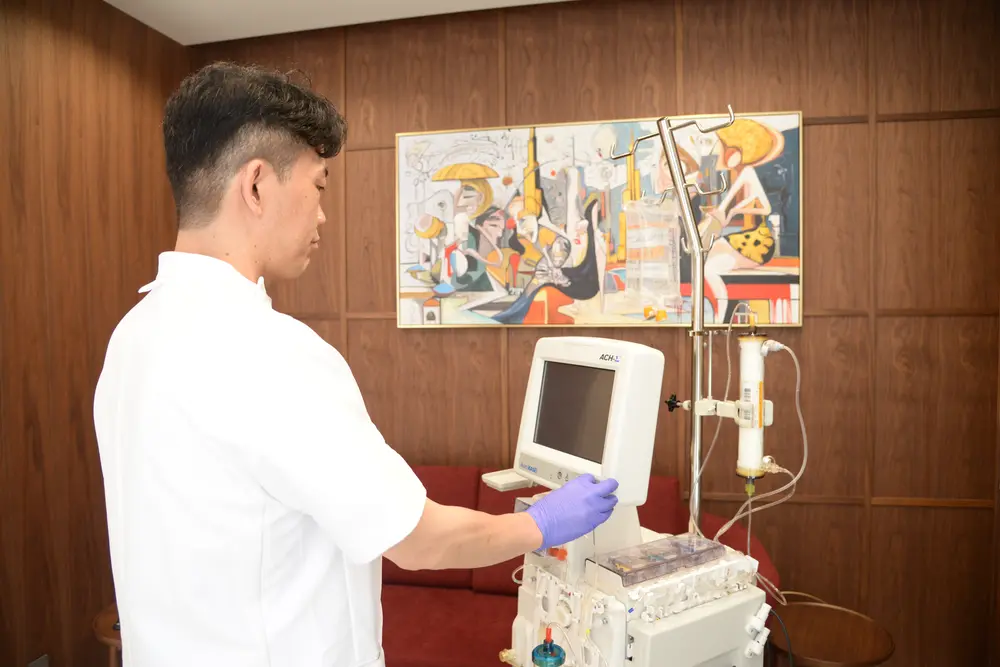
Working on the same principle as dialysis, the blood is taken out of the body, passed through a specialized filtration device that removes disease-causing substances such as LDL cholesterol, triglycerides, inflammatory substances and viruses, and the purified blood is returned.
It is regarded as a significant advance for improving general condition and preventing vascular disease, and is currently attracting attention around the world.
It is drawing interest as a new form of medicine for those who take their day-to-day health seriously and want medical care of a higher standard.
MECHANISM
How It Works
01 ── Consultation
We begin with a consultation.
02 ── Blood draw
Blood is drawn as part of preparing for purification.
03 ── Blood purification
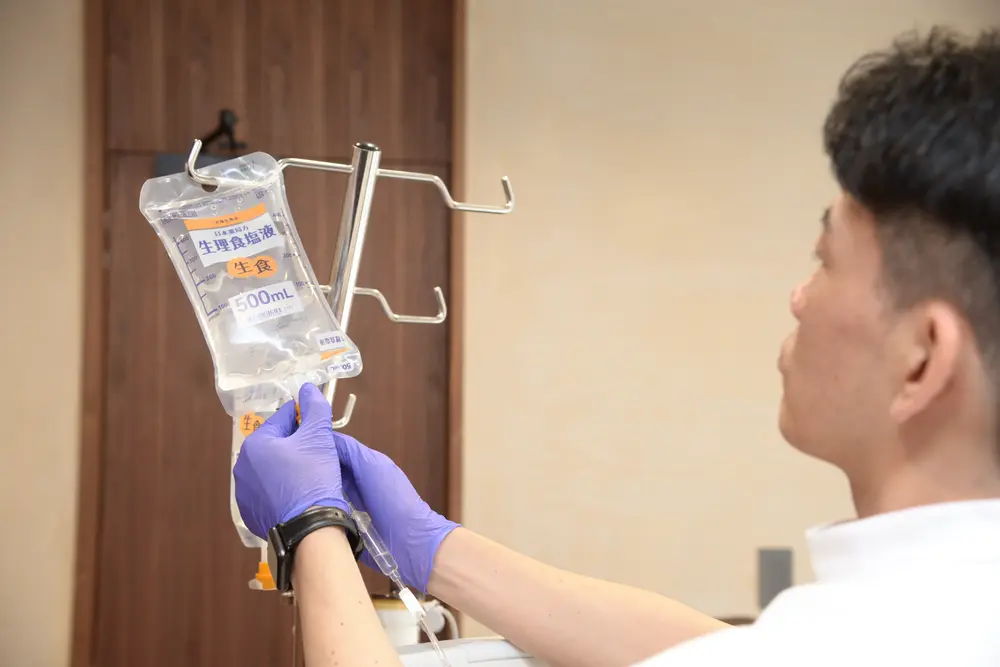
Using a needle about two sizes larger than that of an ordinary IV drip, blood is drawn from one arm and returned through the other.
Roughly 4,000 to 5,000 ml of blood is circulated during purification, and the volume of plasma purified is adjusted according to age and body weight.
04 ── Assessment
After purification, blood is drawn again to assess the results before and after treatment.
INDICATION
Who It Is For
◎ Those at risk of cerebral or myocardial infarction
◎ Those whose blood tests and blood pressure are normal but who show arteriosclerotic changes,
and who want to take active measures although medication is not indicated
◎ Those who have had a cerebral or myocardial infarction despite receiving standard treatment
EFFECT
What to Expect After Treatment
◎ Improvement in LDL cholesterol
◎ Improvement in triglycerides
◎ Improved blood flow, and with it relief from stiff shoulders, feeling cold, and changes in complexion
◎ Direct removal of the lipids and inflammatory cells that cause arteriosclerosis
◎ Improved vascular endothelial function
METHOD
How It Works
DFPP (double filtration plasmapheresis) uses a plasma separator to separate plasma from the blood, then passes it through a secondary filter to remove disease-related substances present in the plasma.
Passing through the secondary filter, disease-causing substances are removed and everything that can pass through is returned to the body.
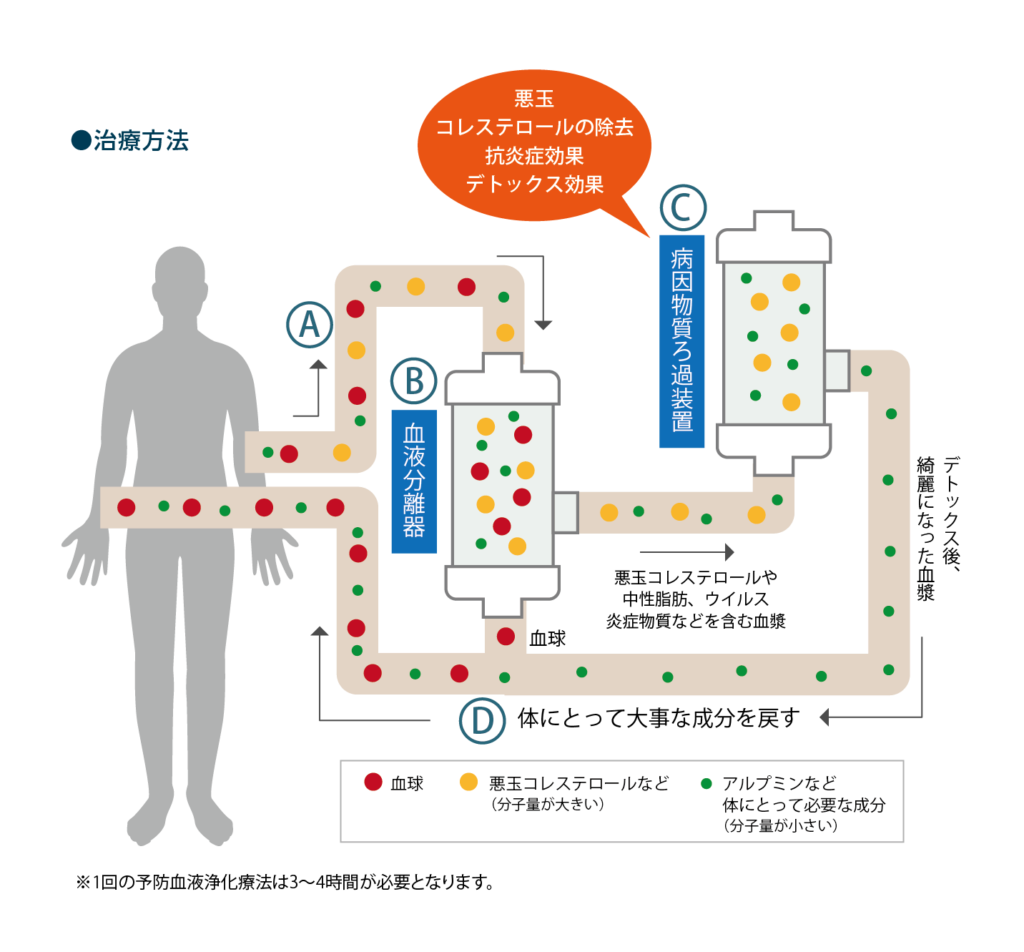
Blood removal
A needle is placed in the patient's arm in preparation for taking blood out of the body.
Plasma separation
The blood passes out through tubing.
A plasma separator divides the blood into blood cells and plasma, and the plasma is sent to the disease-substance filtration device.
Removal of disease-causing substances
The filtration device removes disease-causing substances such as LDL cholesterol, triglycerides and fibrinogen.
Return of blood
The purified plasma is returned to the body together with the blood cells.
Even among those who take their health seriously, it is not unusual for vascular aging to be evident — LDL cholesterol that will not come down, or metabolic syndrome that persists — despite detailed screening and regular examinations.
Rather than waiting for a blood vessel to block and treating a cerebral or myocardial infarction, this is advanced preventive care carried out while the condition is still mild.
CASE
Cases Treated at Our Clinic
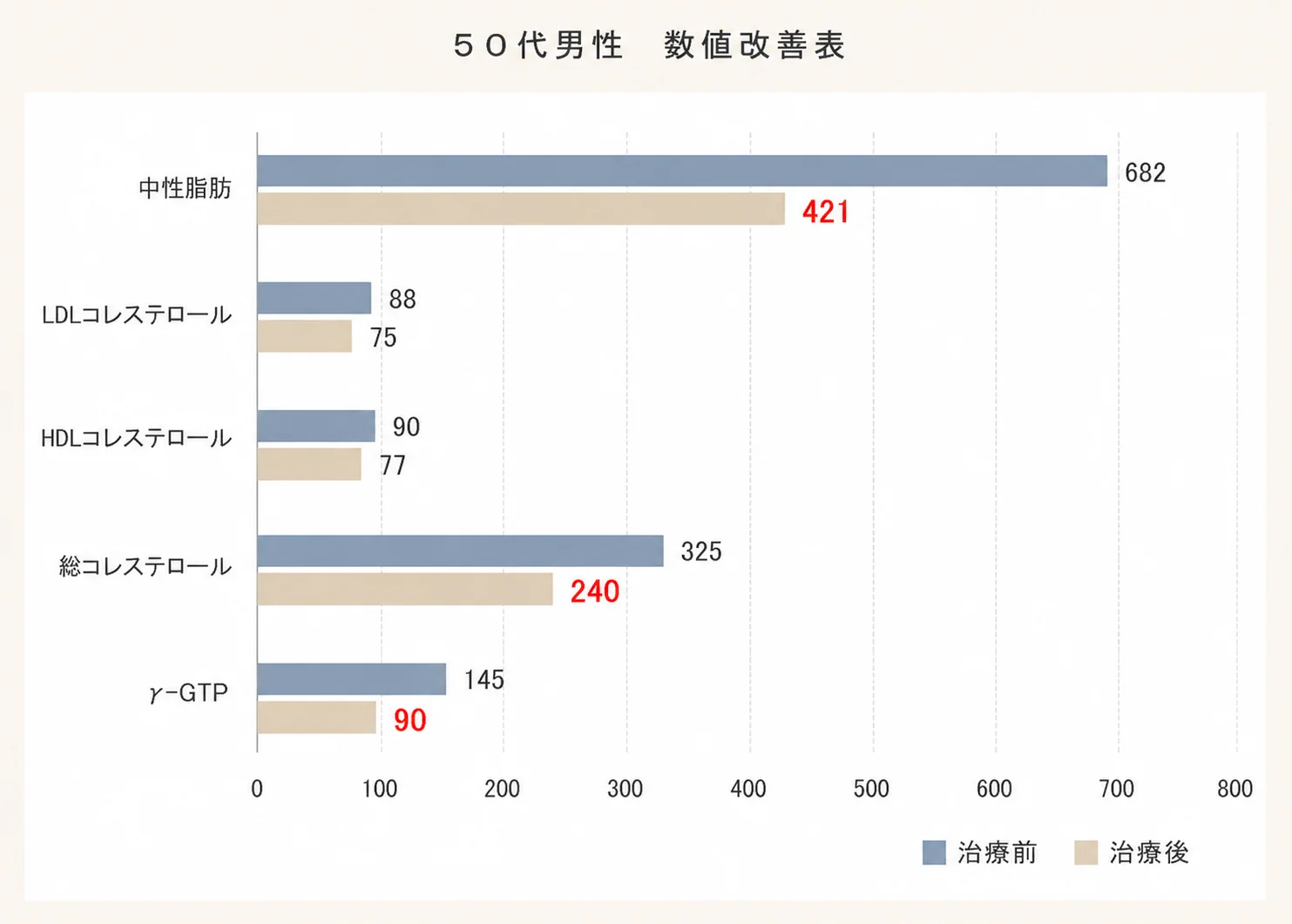
Improvement in the figures for a man in his fifties (before → after treatment).
◎ Triglycerides 682 → 421
◎ Total cholesterol 325 → 240
◎γ-GTP 143 → 90
◎ LDL cholesterol 88 → 75
The filter, before and after use
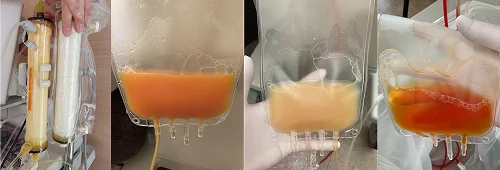
Effects vary from person to person. These figures are one example and do not guarantee the same result for everyone.
FAQ
Frequently Asked Questions
 Patient
Is the treatment painful?
 Physician
Blood purification uses needles about two sizes larger than an ordinary IV drip, one in each arm, so you may feel some pain as they go in.
Sensitivity to pain during treatment varies, so please raise any concerns with us beforehand.
PatientHow long does one session take?
PhysicianOne session of preventive blood purification therapy takes about three to four hours.
Around 4,000 to 5,000 ml of blood is circulated during treatment, and the volume of plasma purified is adjusted according to age and body weight.
The time required varies with the volume purified and your condition, so we will give you a guide at your examination.
PatientWhat effects can I expect?
PhysicianImprovement in LDL cholesterol and triglycerides can be expected, along with improved blood flow and relief from symptoms such as stiff shoulders and feeling cold.
It directly removes the lipids and inflammatory cells that cause arteriosclerosis, with the aim of improving vascular endothelial function.
How the effect appears varies from person to person.
PatientIs there any point if my blood tests are normal?
PhysicianIt is not unusual for arteriosclerotic changes to be present even when blood tests and blood pressure are normal.
Those who want to take active measures although medication is not indicated may also wish to consider it as preventive care.
PatientWho is this treatment recommended for?
PhysicianIt suits those at risk of cerebral or myocardial infarction, and those who have had one despite receiving standard treatment.
It is recommended for those who would rather take preventive care while the condition is still mild than wait for a blood vessel to block.
PatientIs one session enough, or do I need to repeat it?
PhysicianBlood is drawn before and after purification so that the figures can be assessed.
The right number of sessions and interval depends on your condition and how the figures move, so the doctor will make a recommendation based on that assessment.