

PREVENTIVE
MEDICINE
Plasma adsorption therapy
ABOUT
Autoimmune Disease and Immunoadsorption Therapy
Resetting an excessive immune response,
physically.
In autoimmune disease, the immune system that should protect the body works excessively and attacks the body's own tissue.
Behind this lie abnormalities in the blood environment: increased autoantibodies, overproduction of inflammatory cytokines, and a breakdown of immune balance.
This treatment, plasma adsorption therapy, is an approach that physically resets the immune response by removing these disease-causing substances directly from the blood.
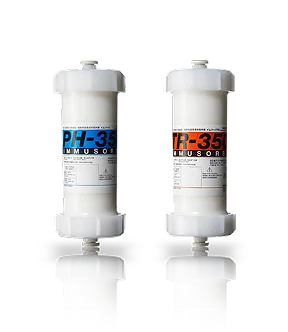
Immunoadsorption columns, Immusorba® (PH-35 / TR-35)
MECHANISM
How It Works
Assessing suitability
A doctor reviews your current symptoms, treatment history and general health, and assesses whether plasma adsorption therapy is appropriate.
Extracorporeal circulation
Blood is circulated outside the body through a dedicated circuit.
Selective removal
Passing through a specialized adsorption column (Immusorba®), autoantibodies and immune-related substances are selectively removed from the blood.
Return of blood
The treated blood is returned to the body.
EFFECTS
Main Effects and Features
Main Effects
◎ Suppressing the inflammatory response
◎ Easing an over-active immune state
◎ Reducing autoantibody load
◎ Slowing the progression of organ damage
Main features
◎ Retains the blood components you need
◎ Removes only the target substances, selectively
◎ More precise than conventional plasma exchange
TARGET
Conditions Addressed
◎ Rheumatoid arthritis
◎ Connective tissue disease (such as SLE)
◎ Severe allergic conditions
◎ Inflammatory conditions
◎ Muscle disorders (including severe cases)
Please note that we may decline treatment in the following cases.
• Those for whom a doctor's examination determines this treatment is not appropriate (for example, those whose blood vessels are unsuitable for apheresis, or those with high anxiety)
• Those judged to have difficulty understanding the risks of the treatment, and similar cases
COMBINATION
Treatments That Combine Well
Stem cell culture supernatant therapy
It works on immune regulation, inflammation and tissue repair, so a cleaner environment can be expected to improve regenerative efficiency.
FLOW
The Process
We hold a consultation
The treatment takes about two to three hours. A nurse and a clinical engineer stay with you in the room, so you can receive treatment with peace of mind.
A needle is inserted in each arm
The needles are about two sizes larger than those used for an ordinary IV drip. Blood is drawn from one arm and returned through the other.
The blood is purified
During purification, roughly 4,000 to 5,000 ml of blood is circulated, and the volume of plasma purified is around 1,500 ml for men and 1,200 to 1,300 ml for women. These figures vary with age and body weight.
Bleeding is stopped
Once we have confirmed that the bleeding has stopped, you can leave right away. Please take plenty of food and fluids afterwards. Bathing after treatment is fine, but please avoid strenuous exercise.
FAQ
Frequently Asked Questions
 Patient
How does this differ from dialysis?
 Physician
Dialysis is a treatment for people with kidney failure. Our immunoadsorption therapy selectively removes autoantibodies and immune-related substances from the blood, with the aim of resetting an excessive immune response.
PatientHow much blood is purified?
PhysicianBlood accounts for about 8% of body weight. We plan for around 1,500 ml in men and 1,200 to 1,300 ml in women, with the exact figures varying by age and body weight.
PatientAre there side effects?
PhysicianA drop in blood pressure or feeling unwell occurs rarely.
PatientHow long does treatment take?
PhysicianPlease allow two to three hours. Because a needle is placed in each arm you cannot move around much during treatment, but you are welcome to watch films on Netflix.