

In recent years, regenerative medicine and its related technologies have been drawing growing attention. Advances in regenerative medicine have brought about unprecedented progress in medical technology. But its impact reaches beyond medicine, and is having a major effect on the beauty industry as well. We invited former newscaster Shiho Hashimoto and former Senior Vice-Minister of Health, Labour and Welfare, Diet member Junko Mihara, to discuss the current state and future direction of regenerative medicine in Japan.
The Development of Regenerative Medicine and the Act on Ensuring Safety
Shiho Hashimoto: Today we’re joined by Upper House member Junko Mihara, who has served as Senior Vice-Minister of Health, Labour and Welfare, and we’d like to hear her views on regenerative medicine from a policy perspective. In recent years, Japan’s regenerative medicine technology has achieved major results, beginning with Professor Yamanaka’s research on iPS cells. To start, could you share your thoughts on how this research should be supported and regulated going forward?
Junko Mihara: The Act on the Safety of Regenerative Medicine, which took effect in 2014 (Heisei 26), regulates the provision of regenerative medicine and helps ensure its safety. This has promoted research and helped bring the technology into practical use. As policymakers, we work with private research institutions and medical institutions, providing various forms of support to advance clinical research while ensuring safety.
International Attention on Japan’s Regenerative Medicine Technology
Shiho Hashimoto: It seems Japan’s regenerative medicine technology is drawing attention overseas as well.
Junko Mihara: Yes, regenerative medicine is one of the fields of technological research that Japan can be proud of on the world stage. Our country’s efforts here have received high praise internationally as well.
Shiho Hashimoto: What is your outlook on the future direction of Japan’s regenerative medicine technology?
Junko Mihara: Japan’s regenerative medicine technology is expected to keep advancing. The government intends to continue working with private research institutions and biotech ventures to promote efficient clinical research while ensuring safety. We will continue to promote R&D through AMED research funding and support the appropriate operation of the regenerative medicine laws. Regenerative medicine is a crucial field that will shape the future of healthcare in Japan, and cooperation between government and the private sector is essential to ensuring its safety and effectiveness. We hope to see further efforts toward developing this field going forward.
Legal Interpretation of New Medical Technologies and Safety Concerns
Shiho Hashimoto: New medical technologies such as stem cell culture supernatant and exosomes are drawing attention in regenerative medicine — how are they regulated under current law?
Junko Mihara: Stem cell culture supernatant and exosomes are treated as cell fragments, and so fall outside the scope of the regenerative medicine laws. Furthermore, no pharmaceutical products using these technologies have received pharmaceutical regulatory approval. That said, when they are compounded in-house at a physician’s discretion, they fall outside the scope of the Pharmaceutical Affairs Act, meaning they are not currently subject to regulation under existing law.
Shiho Hashimoto: But there are cases where these technologies are given product names and distributed to medical institutions — how is that situation interpreted legally?
Junko Mihara: Distribution to medical institutions is likely taking place as the supply of research-use materials. In other words, these products are being provided for the purpose of being compounded in-house, mixed with saline solution and the like.
Shiho Hashimoto: So supplying them as research-use materials isn’t regulated. How, then, is safety maintained?
Junko Mihara: When these are actually administered to the human body, ensuring safety during the manufacturing process is essential. Manufacturers need to manufacture in facilities that meet standards for preventing viral or bacterial contamination, and to test each lot for contamination and infection risk. However, when intended for research use, products may sometimes be shipped without meeting certain testing standards. When a physician administers such a product to a patient, they must carefully assess its safety and provide the patient with a thorough explanation.
The Current State and Regulation of Exosome Use at Aesthetic Clinics
Shiho Hashimoto: Recently, technologies such as exosomes have been marketed with catchy claims of beauty benefits, and there are cases of unauthorized IV-drip treatments being offered at aesthetic clinics — what are your thoughts on this?
Junko Mihara: Exosomes fall outside the scope of the Act on the Safety of Regenerative Medicine, but under the Medical Care Act, medical institutions are prohibited from providing patients with false or exaggerated information. Specifically, it is legally prohibited for a medical institution’s advertising to be false or exaggerated, or to convey information that differs from the facts. Because of this, the Ministry of Health, Labour and Welfare monitors inappropriate websites, informs medical institutions of the relevant regulations to encourage voluntary review, and provides information to prefectural governments so that necessary guidance can be given.
Shiho Hashimoto: I recently visited Japan’s largest trade show for cosmetics, health foods, and beauty devices, and exosomes were everywhere — “pure exosomes,” “VIP exosomes,” and all kinds of other product lineups, with flashy packaging and high price tags as their defining features. There was also a lot of talk about how much or how little exosome content a product contained, but what do you think about this trend of leading people to believe a product is effective based on the word “exosome” alone, without understanding what an exosome actually is?
Junko Mihara: When it comes to advertising for products such as cosmetics, health foods, and beauty devices, the necessary oversight and guidance are carried out under the Act on Pharmaceuticals and Medical Devices, among other laws. This oversight considers product labeling and advertising content comprehensively, and any product whose advertising claims pharmaceutical-like effects is prohibited from sale under that law. In addition, it may be necessary to establish scientifically grounded guidelines on the administration of exosomes and similar substances, so that such treatments are not administered inappropriately at clinics and similar facilities.
The Future of Regenerative Medicine Legislation
In this dialogue on regenerative medicine, we discussed the effects and challenges brought about by the regenerative medicine laws, as well as the direction things should take going forward. Thanks to these laws, research and practice in regenerative medicine in Japan have advanced dramatically and are drawing attention worldwide. As policymakers, the government has indicated its intention to encourage cooperation with private research institutions and biotech ventures, providing support to advance clinical research efficiently while ensuring safety.
At the same time, it became clear that the application of current law is limited when it comes to new medical technologies such as exosomes and stem cell culture supernatant, which fall outside the scope of the regenerative medicine laws. Certain forms, such as in-house compounding by a physician, fall outside the scope of regulation, and it was noted that challenges remain in evaluating and managing their safety and effectiveness.
It was also suggested that the use and sale of exosomes in the beauty industry may require advertising regulation similar to that applied to pharmaceuticals and medical devices. Exaggerated or false advertising regarding a product’s effects is prohibited, and compliance with these regulations is required. Furthermore, developing scientific guidelines and strengthening oversight and guidance were identified as important means of promoting the appropriate use of new medical technologies, including regenerative medicine.
Going forward, regulation and guidance aimed at ensuring the safety and effectiveness of technologies and products in the field of regenerative medicine will need to be strengthened, alongside guidelines and information grounded in scientific evidence. This is expected to help create an environment in which users can receive regenerative medicine and related technologies with peace of mind, and to further promote progress in both the medical and aesthetic fields.

Junko Mihara
Official Website https://www.miharajunco.org/
Facebook https://www.facebook.com/junco.mihara/
Instagram https://www.instagram.com/miharajunco/
Shiho Hashimoto
Blog https://ameblo.jp/hashimotoshiho/
Facebook https://www.facebook.com/officialshiho/
Instagram https://www.instagram.com/shihohashimoto3/
BiOSTYLE Clinic’s Position on Exosomes
In connection with treatments using extracellular vesicles (exosomes) featured on TV variety programs and elsewhere, a mistaken belief has spread — and is becoming something of a trend — that exosomes themselves have a groundbreaking effect on beauty and rejuvenation. There have also been problematic cases in which aesthetic clinics and similar facilities have driven excessive expectations of efficacy, leading to disputes over high-priced treatments and even cases of harm to health. Our clinic group has been actively providing treatment using various types of stem cell culture supernatant since 2018, and while this stem cell culture supernatant does contain extracellular vesicles (exosomes), our approach differs from these other treatments. To help ensure our treatment is correctly understood, we present our clinic’s position on exosome-based treatment here. Some medical institutions and manufacturers have begun advertising products based on “high purity” — obtained by isolating exosomes alone from stem cell culture supernatant — or “high concentration,” referring to a large number of extracellular vesicles (exosomes). However, an exosome is, fundamentally, a tool that cells use to exchange the information needed for cell generation, metabolism, and differentiation with one another, and what matters is the information carried within the exosome, such as microRNA — a higher exosome concentration or purity does not proportionally translate into a greater treatment effect. In addition, because an exosome carries information from the donor cell that produced it, if that donor cell had some kind of abnormality, the exosome may carry unfavorable cellular information. Concentrating or purifying exosomes without first verifying the donor cells can therefore carry certain risks. The exosome research being conducted at leading research institutions is primarily aimed at using exosomes to deliver useful microRNA into cells, and should never be conflated commercially with the kinds of products described above.
About the Stem Cell Culture Supernatant Treatment Provided at BiOSTYLE Clinic
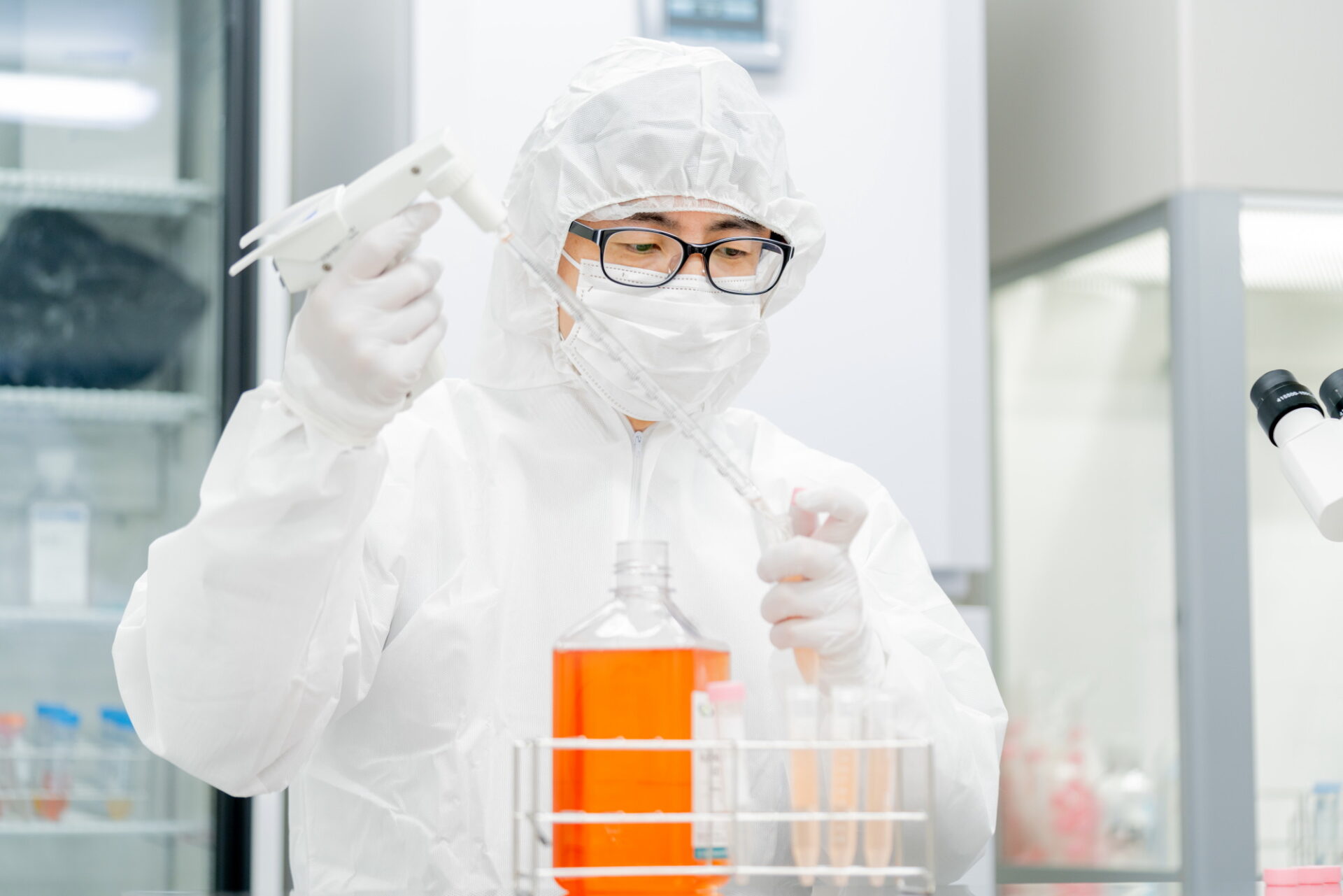
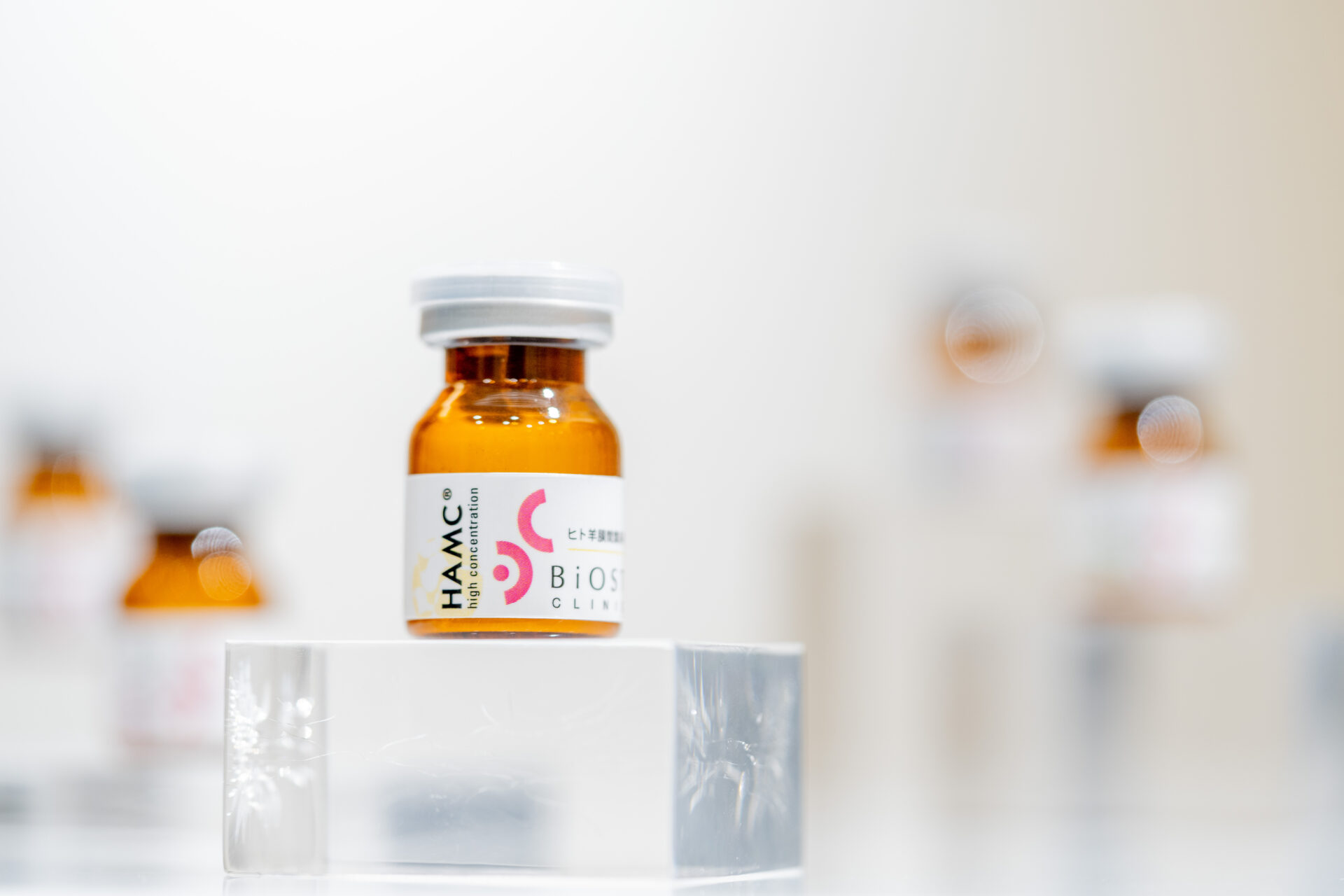
The stem cell culture supernatant used at our clinic does contain exosomes, but what we focus on is not the exosomes themselves, but the abundance of growth factors with well-documented effects that it also contains. Stem cell culture supernatant has a large number of clinical cases in Japan as well, and there is a substantial body of research on its safety and effectiveness. It is possible to examine the quantity and distribution spectrum of growth factors in the culture supernatant, which we believe allows us to apply it in treatment while predicting, to some extent, its usefulness to the human body. In addition, by using culture supernatant from baby-derived stem cells — sourced from umbilical cord blood, placenta, amniotic membrane, and dental pulp from deciduous tooth roots, where donor cells are considered unlikely to release exosomes carrying adverse information — we minimize the possibility that the exosomes in our culture supernatant contain any adverse information.
Legal Interpretation From Manufacturing to Administration, and Our Safety Management Manifest
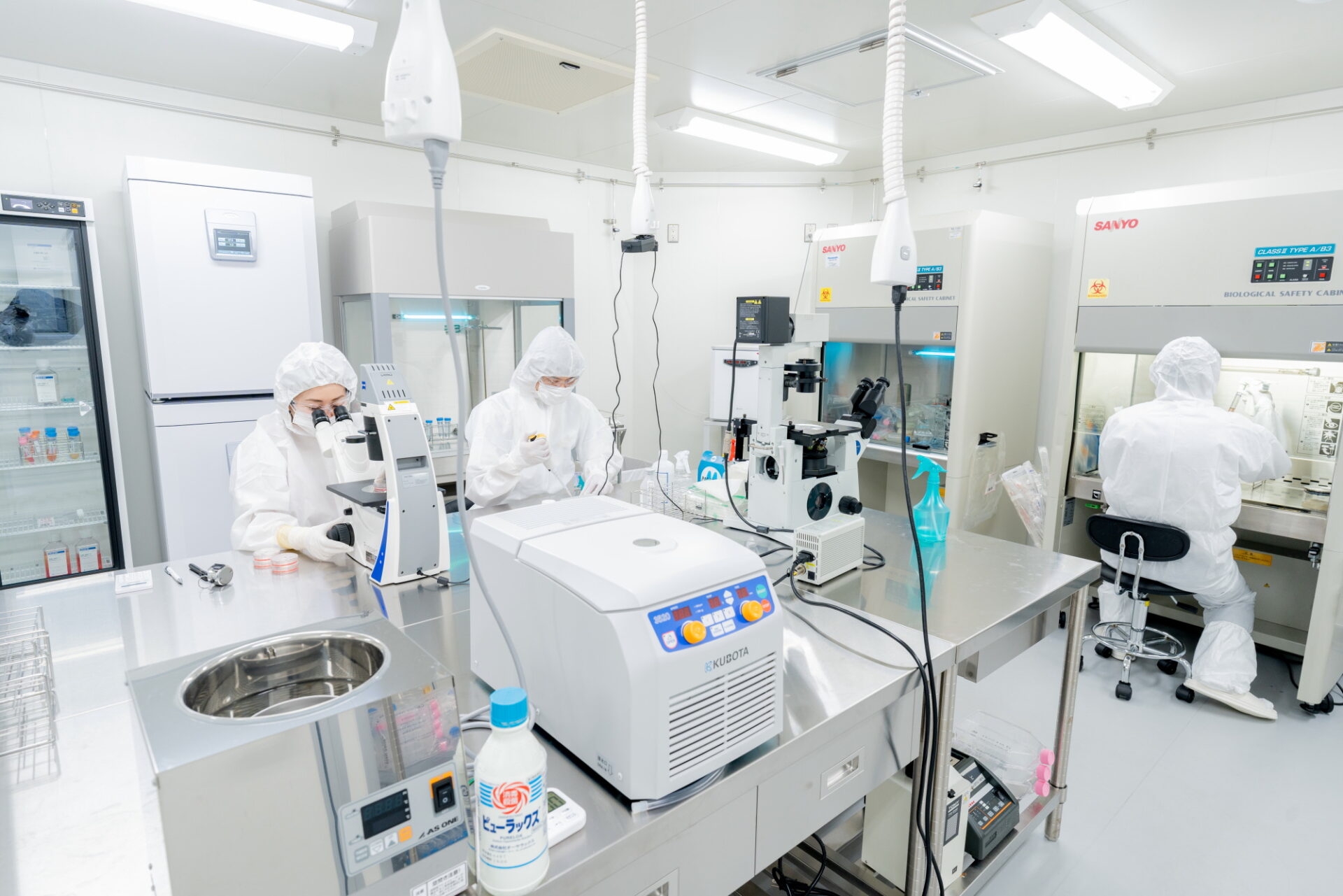
Stem cell culture supernatant and exosomes are procured by medical institutions as research-use materials and administered in-house under a physician’s responsibility after in-house compounding; as such, they are interpreted as falling outside the scope of the Pharmaceutical Affairs Act, and are accordingly not subject to regulation. Because the laws governing research-use materials do not strictly require reporting on the manufacturing process or mandate inspection obligations, medical institutions that place blind trust in a manufacturer can find themselves at greater risk of accidents caused by contamination. Medical institutions themselves need to set strict voluntary standards for the manufacturing process, and our clinic achieves this by conducting an endotoxin test on every single lot, and by manufacturing materials either in-house at our specified cell-processing facility, which meets ISO 5 or GMP standards, or through a partner research institution that meets the standards we require and with which our clinic is affiliated. Our clinic also holds a Class II Regenerative Medicine Provision Plan number and meets the facility standards required for regenerative medicine, and treatment using stem cell culture supernatant is carried out by physicians and staff with sufficient knowledge of cell therapy and the skills needed to respond in an emergency.